
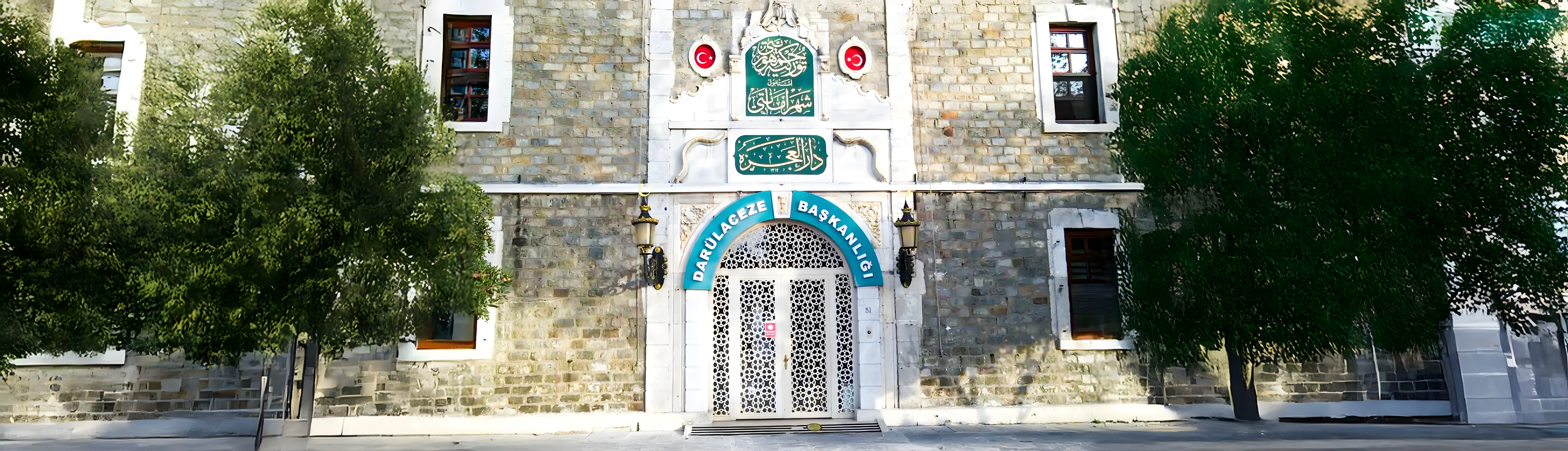
INSTITUTIONAL
History
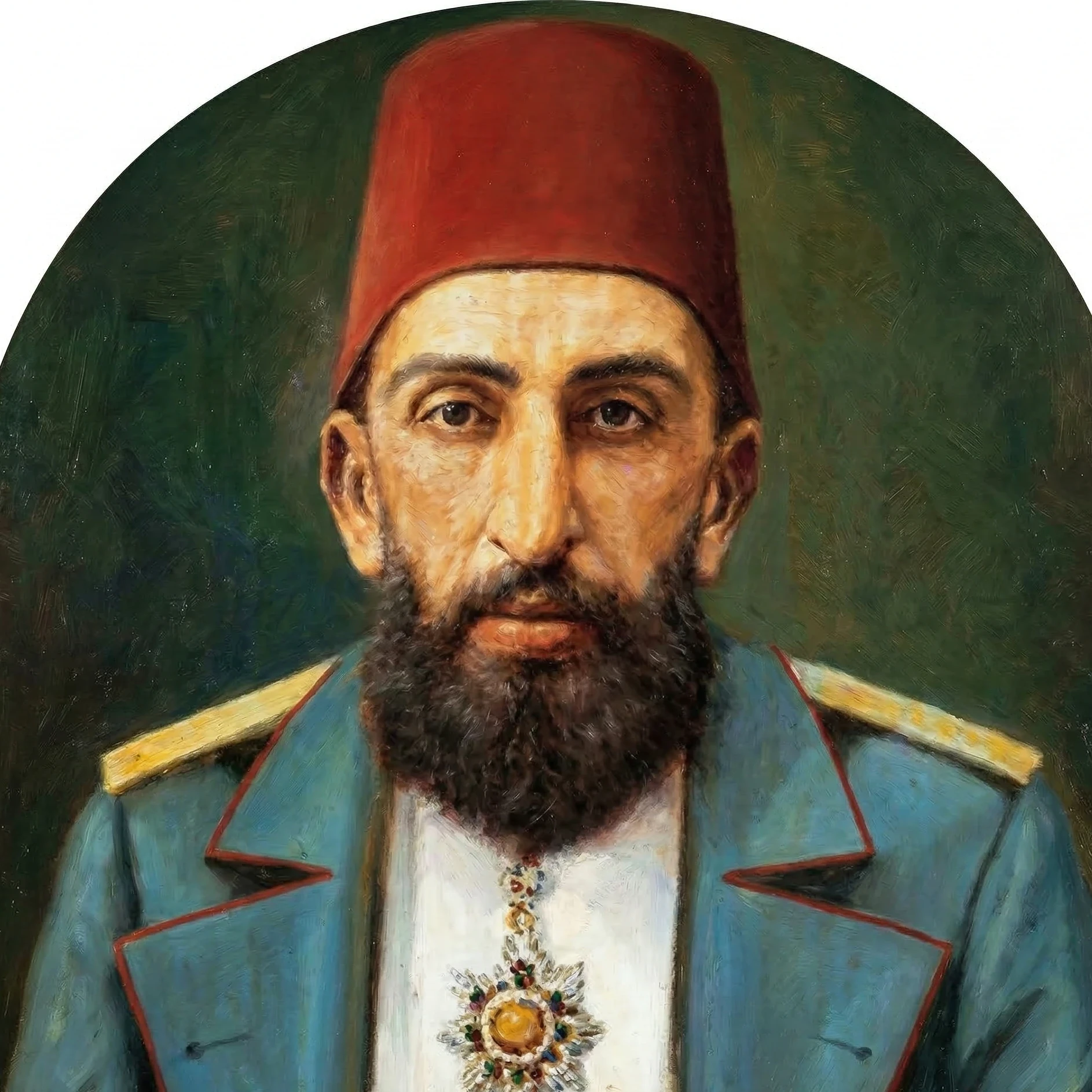
1890-1923
The Ottoman Period and the Establishment of Darülaceze (a charitable institution)
Construction and First Years of Service of Darülaceze
The need for systematic aid that arose after the Ottoman-Russian War, also known in historical sources as the '93 War', made a comprehensive study essential. Due to the social crises, the increase in health problems such as epidemics, and the widespread begging that could not be prevented, the Sultan of the time, Abdülhamid II, ordered that clear solutions be brought to all problems.
The Sultan's order dated March 30, 1890, is as follows;
“Our Sultan has ordered that a place be set aside for the education and upbringing of orphaned children and sick and disabled men and women who are forced to beg on the streets to make a living, so that they can earn a living by working to the extent that their bodies can withstand and are able to do so; that those who are unable to work can be fed and housed; and that a place be set aside for the education and upbringing of orphaned children; and that the Council of State immediately discuss the details of where in Istanbul, what plan and design, and what size of building should be constructed for this purpose, and from where and in what amount of funds should be allocated, and other details, and that a regulation be written on this matter as soon as possible and presented to him.”
As a result of this decree, land in Hacı Reşit Ağa and Balmumcu, as well as land in Okmeydanı (Kağıthane Village Pasture), where the institution currently serves, were examined. Following extensive studies, construction of the buildings began on November 10, 1892. The complex was built based on a hospital system (pavilion system) consisting of multiple units within the same garden, taking into account similar hospital structures around the world.
The declaration that the institution did not discriminate based on religion, sect, or race in its admission criteria, a great example of tolerance, also increased the charitable contributions to the construction of Darülaceze. Wealthy individuals belonging to various religions and sects living in Istanbul made significant contributions to the construction of the institution. The 10,000 gold liras donated from Sultan Abdülhamid Han's personal fortune and the 7,000 liras obtained from the sale of valuable items sent from the provinces were used to cover the construction costs of the Darülaceze.
Upon completion of the construction, the Minister of the Interior, Halil Rıfat Pasha, handed over the keys of the institution to Sultan Abdülhamid on the day of his accession to the throne (the anniversary of his ascension), August 31, 1895. However, the Sultan, who highly valued the Darülaceze, postponed its opening until minor deficiencies were rectified and the laws regarding its management were finalized.
Once all preparations were complete, the Darülaceze was opened to service with a ceremony held on January 31, 1896 (16 Shaban 1313), which is also celebrated as the birthday of Sultan Abdülhamid II. From this date onwards, the word "Darülaceze (poorhouse)" began to be used as the institution's proper name.
During the Republican era, the institution was also referred to by names such as Darülaceze Institution, Istanbul Darülaceze Institution, Darülaceze Directorate, and Darülaceze Administration.
Since its opening, under the umbrella of Darülaceze, service has been provided with the desire for a peaceful, happy, and prosperous society and with the responsibility of wholeheartedly giving what one possesses. This responsibility has been reinforced by the hadith of the Prophet of Islam, one of the unifying elements of Turkish society: "You see the believers as one body in their love for one another, their mercy towards one another, and their compassion for one another; if one of its limbs is afflicted, the other limbs share in its suffering with sleeplessness and fever."
The need for systematic aid that arose after the Ottoman-Russian War, also known in historical sources as the '93 War', made a comprehensive study essential. Due to the social crises, the increase in health problems such as epidemics, and the widespread begging that could not be prevented, the Sultan of the time, Abdülhamid II, ordered that clear solutions be brought to all problems.
The Sultan's order dated March 30, 1890, is as follows;
“Our Sultan has ordered that a place be set aside for the education and upbringing of orphaned children and sick and disabled men and women who are forced to beg on the streets to make a living, so that they can earn a living by working to the extent that their bodies can withstand and are able to do so; that those who are unable to work can be fed and housed; and that a place be set aside for the education and upbringing of orphaned children; and that the Council of State immediately discuss the details of where in Istanbul, what plan and design, and what size of building should be constructed for this purpose, and from where and in what amount of funds should be allocated, and other details, and that a regulation be written on this matter as soon as possible and presented to him.”
As a result of this decree, land in Hacı Reşit Ağa and Balmumcu, as well as land in Okmeydanı (Kağıthane Village Pasture), where the institution currently serves, were examined. Following extensive studies, construction of the buildings began on November 10, 1892. The complex was built based on a hospital system (pavilion system) consisting of multiple units within the same garden, taking into account similar hospital structures around the world.
The declaration that the institution did not discriminate based on religion, sect, or race in its admission criteria, a great example of tolerance, also increased the charitable contributions to the construction of Darülaceze. Wealthy individuals belonging to various religions and sects living in Istanbul made significant contributions to the construction of the institution. The 10,000 gold liras donated from Sultan Abdülhamid Han's personal fortune and the 7,000 liras obtained from the sale of valuable items sent from the provinces were used to cover the construction costs of the Darülaceze.
Upon completion of the construction, the Minister of the Interior, Halil Rıfat Pasha, handed over the keys of the institution to Sultan Abdülhamid on the day of his accession to the throne (the anniversary of his ascension), August 31, 1895. However, the Sultan, who highly valued the Darülaceze, postponed its opening until minor deficiencies were rectified and the laws regarding its management were finalized.
Once all preparations were complete, the Darülaceze was opened to service with a ceremony held on January 31, 1896 (16 Shaban 1313), which is also celebrated as the birthday of Sultan Abdülhamid II. From this date onwards, the word "Darülaceze (poorhouse)" began to be used as the institution's proper name.
During the Republican era, the institution was also referred to by names such as Darülaceze Institution, Istanbul Darülaceze Institution, Darülaceze Directorate, and Darülaceze Administration.
Since its opening, under the umbrella of Darülaceze, service has been provided with the desire for a peaceful, happy, and prosperous society and with the responsibility of wholeheartedly giving what one possesses. This responsibility has been reinforced by the hadith of the Prophet of Islam, one of the unifying elements of Turkish society: "You see the believers as one body in their love for one another, their mercy towards one another, and their compassion for one another; if one of its limbs is afflicted, the other limbs share in its suffering with sleeplessness and fever."
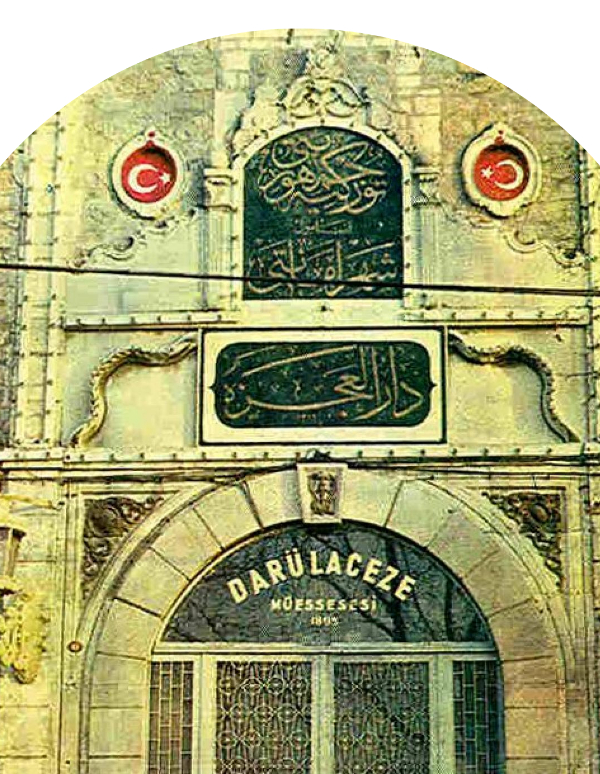
1923-1990
Republican Era
The Islamic understanding, which broadens the scope of mutual assistance, advises individuals to use their knowledge, experience, and skills for a good cause, of their own free will, for the benefit of "others." However, like the entire country, Darülaceze has been forced to endure painful periods in its history where this purpose was not followed. For Istanbul, which had to cope with economic and social problems in the last years of the Empire, the declaration of the Republic and the relocation of the capital to Ankara meant a demographic collapse. Istanbul, which had a population of over 1 million in 1896, had fallen to 680,000 in the 1927 census. Due to reasons such as imperial exiles and migrations to the capital, the management of the institution was left to the mercy of incompetent administrators and employees who were only concerned with their own interests. Photo albums and newspaper articles in the archives show that administrative problems caused disruptions in the residents' access to basic care and health services. Unfortunately, the assets of Darülaceze, a charitable institution that provided services with its own resources, were subjected to the misuse of incompetent individuals. Those who used the institution's resources for their personal gain have been held accountable before history and condemned in the conscience of society for failing to fulfill the requirements of this valuable duty.
In the 1940s, a debate arose regarding the institution's founder, and until the mid-1960s, the administrators of the time tried to erase the name and influence of Darülaceze, which Sultan Abdülhamit called "one of my most valuable works." In the book prepared by Necdet Hilmi Şener, who was the director of Darülaceze between 1965 and 1990, the archival documents obtained from that period have once again given Sultan his due.
Şener, with this service, gave what was due to its rightful owner, and during his presidency, he tried to improve the physical conditions of the institution, which were far below standards, but sufficient renovation work could not be carried out.
In the early 1990s, the institution, which had only one doctor and 6 nurses and no ambulance, had its situation described by the Institution Director Bülent Durgun; "The apartments were uninhabitable due to the smell of urine. The heating system was in a terrible state. The institution was heated by a central system, but all the underground pipes were punctured, and the water would cool down by the time it reached the apartments. The windows let all the cold in. The laundry room was still operating with a system established in 1905. Huge rats were coming out of the oven and the kitchen. Dozens of people had fallen and broken hips, been injured, or died because the floor tiles were loose while walking in the apartments. There were people who filled plastic bags with boiling water and put them between their legs to avoid freezing at night, and then got burned. When I started my job, Darülaceze was in a dire financial situation. Even the Metropolitan Municipality's Directorate of Distributed Sales, which supplied the institution with provisions, had given up. Darülaceze, an institution affiliated with the Metropolitan Municipality, was being told, 'If you don't make payments, we will no longer be able to provide you with provisions.' It was unclear how, in what way, and who owned the properties. Darülaceze was in such a state of ruin, on the verge of being shut down."
In the 1940s, a debate arose regarding the institution's founder, and until the mid-1960s, the administrators of the time tried to erase the name and influence of Darülaceze, which Sultan Abdülhamit called "one of my most valuable works." In the book prepared by Necdet Hilmi Şener, who was the director of Darülaceze between 1965 and 1990, the archival documents obtained from that period have once again given Sultan his due.
Şener, with this service, gave what was due to its rightful owner, and during his presidency, he tried to improve the physical conditions of the institution, which were far below standards, but sufficient renovation work could not be carried out.
In the early 1990s, the institution, which had only one doctor and 6 nurses and no ambulance, had its situation described by the Institution Director Bülent Durgun; "The apartments were uninhabitable due to the smell of urine. The heating system was in a terrible state. The institution was heated by a central system, but all the underground pipes were punctured, and the water would cool down by the time it reached the apartments. The windows let all the cold in. The laundry room was still operating with a system established in 1905. Huge rats were coming out of the oven and the kitchen. Dozens of people had fallen and broken hips, been injured, or died because the floor tiles were loose while walking in the apartments. There were people who filled plastic bags with boiling water and put them between their legs to avoid freezing at night, and then got burned. When I started my job, Darülaceze was in a dire financial situation. Even the Metropolitan Municipality's Directorate of Distributed Sales, which supplied the institution with provisions, had given up. Darülaceze, an institution affiliated with the Metropolitan Municipality, was being told, 'If you don't make payments, we will no longer be able to provide you with provisions.' It was unclear how, in what way, and who owned the properties. Darülaceze was in such a state of ruin, on the verge of being shut down."
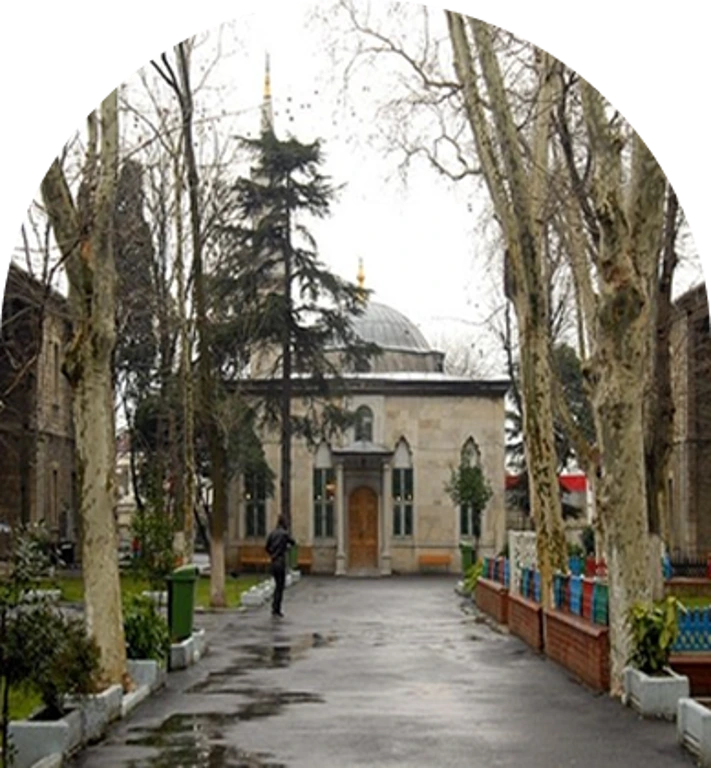
1994-2024
Years of Reconstruction
For over a century, Darülaceze has been among the exemplary institutions serving its founding purpose. With roots dating back to the imperial years, the institution has also served as an example and guide for the social service understanding of the young republic.
Having managed to operate without deviating from its purpose for many years, the institution has, of course, been greatly affected by the economic and political turmoil of the country. The Darülaceze complex has undergone many changes in parallel with the changes and developments, due to resource and capacity deficiencies and in order to meet the needs.
The late 1990s and early 2000s are considered the beginning of significant changes for Türkiye and the world. Significant advancements were made during the premiership and presidency of Mr. Recep Tayyip Erdoğan, who was elected as the Mayor of Istanbul Metropolitan Municipality in 1994. In this process, one of the areas that has achieved successful momentum, reached world standards, and surpassed these standards, bringing our country to the position of a "model country" is the development of social services. The most significant of the rehabilitation efforts of existing institutions is, of course, the renewal that Darülaceze has undergone. Having made significant innovations in terms of both physical infrastructure and service quality, Darülaceze has shed the negative image it portrayed in the media throughout the 1990s and transformed into one of the important addresses of peace and tranquility. Today, the historical Darülaceze complex, spanning 27,000 square meters and featuring 11 buildings with horizontal architecture, technical workshops, a mosque, a church, and a synagogue, has undergone a complete transformation. Additional floors, structures built adjacent to the buildings, and garden areas that residents couldn't fully utilize in the past to meet the increasing needs of residents and staff have been restructured, giving the complex a brand new look. With its renovated and well-maintained buildings and gardens, the Darülaceze complex has now become a social life complex that meets the needs of residents and staff, providing a peaceful and safe environment for them to spend time. Following physical improvements, the employment of trained and equipped personnel, the renewal of equipment that had reached the end of its lifespan, and the furnishing of the building have raised the quality of services provided at Darülaceze to above world standards.
Dormitory and Cultural Facility
With the aim of enabling Darülaceze, which has been operating for over a century without burdening the state with its own properties and donations from philanthropists, to provide higher quality services and ensure its sustainability, the “Darülaceze Dormitory and Cultural Facility”, located in the institution's parking area, was built on a total area of 36,783 square meters.
The project, which started on November 7, 2019, was rapidly completed with the great contributions of our President Erdoğan and was opened to service on September 26, 2021, with his participation.
Today, the facility, which consists of five main functions, actively serves under the General Directorate of Student Loans and Dormitories, providing a solution to the housing problem of students studying at 50 different universities in Istanbul, including a student dormitory, commercial units, a Family Health Center, a 12,000 square meter parking lot, a shelter, and technical areas.
Having managed to operate without deviating from its purpose for many years, the institution has, of course, been greatly affected by the economic and political turmoil of the country. The Darülaceze complex has undergone many changes in parallel with the changes and developments, due to resource and capacity deficiencies and in order to meet the needs.
The late 1990s and early 2000s are considered the beginning of significant changes for Türkiye and the world. Significant advancements were made during the premiership and presidency of Mr. Recep Tayyip Erdoğan, who was elected as the Mayor of Istanbul Metropolitan Municipality in 1994. In this process, one of the areas that has achieved successful momentum, reached world standards, and surpassed these standards, bringing our country to the position of a "model country" is the development of social services. The most significant of the rehabilitation efforts of existing institutions is, of course, the renewal that Darülaceze has undergone. Having made significant innovations in terms of both physical infrastructure and service quality, Darülaceze has shed the negative image it portrayed in the media throughout the 1990s and transformed into one of the important addresses of peace and tranquility. Today, the historical Darülaceze complex, spanning 27,000 square meters and featuring 11 buildings with horizontal architecture, technical workshops, a mosque, a church, and a synagogue, has undergone a complete transformation. Additional floors, structures built adjacent to the buildings, and garden areas that residents couldn't fully utilize in the past to meet the increasing needs of residents and staff have been restructured, giving the complex a brand new look. With its renovated and well-maintained buildings and gardens, the Darülaceze complex has now become a social life complex that meets the needs of residents and staff, providing a peaceful and safe environment for them to spend time. Following physical improvements, the employment of trained and equipped personnel, the renewal of equipment that had reached the end of its lifespan, and the furnishing of the building have raised the quality of services provided at Darülaceze to above world standards.
Dormitory and Cultural Facility
With the aim of enabling Darülaceze, which has been operating for over a century without burdening the state with its own properties and donations from philanthropists, to provide higher quality services and ensure its sustainability, the “Darülaceze Dormitory and Cultural Facility”, located in the institution's parking area, was built on a total area of 36,783 square meters.
The project, which started on November 7, 2019, was rapidly completed with the great contributions of our President Erdoğan and was opened to service on September 26, 2021, with his participation.
Today, the facility, which consists of five main functions, actively serves under the General Directorate of Student Loans and Dormitories, providing a solution to the housing problem of students studying at 50 different universities in Istanbul, including a student dormitory, commercial units, a Family Health Center, a 12,000 square meter parking lot, a shelter, and technical areas.
2020 and Beyond
Darülaceze's Investments for the Future
Dormitory and Cultural Facility
With the aim of enabling Darülaceze, which has been operating for over a century without burdening the state with its own properties and donations from philanthropists, to provide higher quality services and ensure its sustainability, the “Darülaceze Dormitory and Cultural Facility” was built on a total area of 36,783 square meters, located in the institution's parking area.
The facility, consisting of five main functions, currently provides a student dormitory that solves the housing problem of students from 50 different universities studying in Istanbul, commercial units, a Family Health Center, a 12,000 square meter parking lot, a shelter, and technical spaces, all of which are actively serving.
The project, which started on November 7, 2019, was rapidly completed with the great contributions of our President Erdoğan and was opened to service on September 26, 2021, with his participation.
In 2019, the facility, which was awarded the "Sign of the City Awards - Best Socio-Cultural Building" – considered one of the most prestigious awards in the real estate sector and a competition for architectural projects that leave their mark on cities – has achieved significant success not only through its social and architectural added value but also by generating resources for the services of Darülaceze, which sustains its activities through donations.
Social Service City
The physical improvement of Darülaceze's historical campus, raising the quality of services provided above world standards, and expanding this unique service model have become a necessity.
Based on the vision of the New Turkey, the Darülaceze service model, with the aim of carrying its historical and social heritage to future generations, has been implemented under the patronage of the Presidency as the Darülaceze Social Service City project.
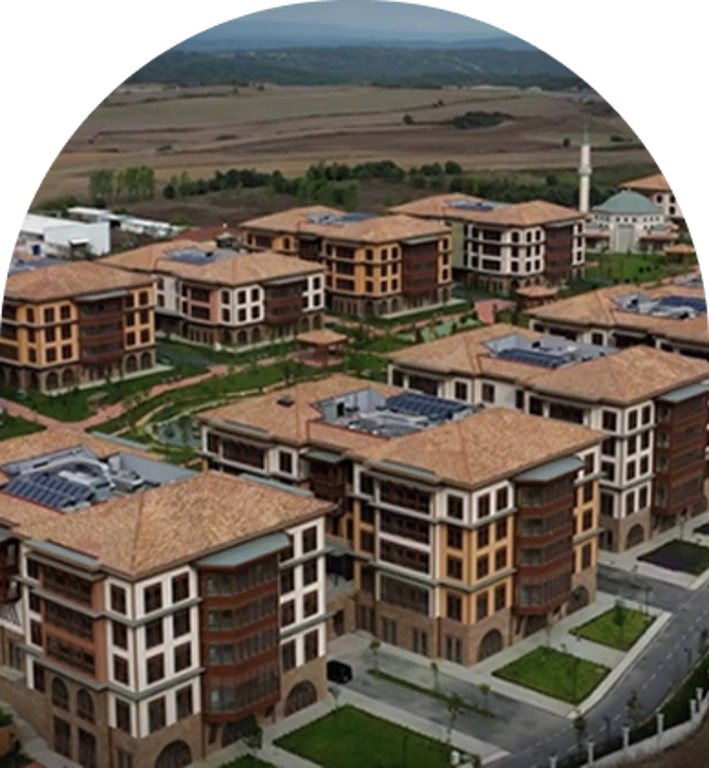
Volunteers, private companies, leading figures from the business, art, sports and education worlds, state banks, and communication companies have made significant contributions to the construction of the Arnavutköy Social Services City, a unique facility in the world, built on 150,000 square meters in the Yassıören neighborhood using horizontal architecture principles.
With the aim of enabling Darülaceze, which has been operating for over a century without burdening the state with its own properties and donations from philanthropists, to provide higher quality services and ensure its sustainability, the “Darülaceze Dormitory and Cultural Facility” was built on a total area of 36,783 square meters, located in the institution's parking area.
The facility, consisting of five main functions, currently provides a student dormitory that solves the housing problem of students from 50 different universities studying in Istanbul, commercial units, a Family Health Center, a 12,000 square meter parking lot, a shelter, and technical spaces, all of which are actively serving.
The project, which started on November 7, 2019, was rapidly completed with the great contributions of our President Erdoğan and was opened to service on September 26, 2021, with his participation.
In 2019, the facility, which was awarded the "Sign of the City Awards - Best Socio-Cultural Building" – considered one of the most prestigious awards in the real estate sector and a competition for architectural projects that leave their mark on cities – has achieved significant success not only through its social and architectural added value but also by generating resources for the services of Darülaceze, which sustains its activities through donations.
Social Service City
The physical improvement of Darülaceze's historical campus, raising the quality of services provided above world standards, and expanding this unique service model have become a necessity.
Based on the vision of the New Turkey, the Darülaceze service model, with the aim of carrying its historical and social heritage to future generations, has been implemented under the patronage of the Presidency as the Darülaceze Social Service City project.
Volunteers, private companies, leading figures from the business, art, sports and education worlds, state banks, and communication companies have made significant contributions to the construction of the Arnavutköy Social Services City, a unique facility in the world, built on 150,000 square meters in the Yassıören neighborhood using horizontal architecture principles.